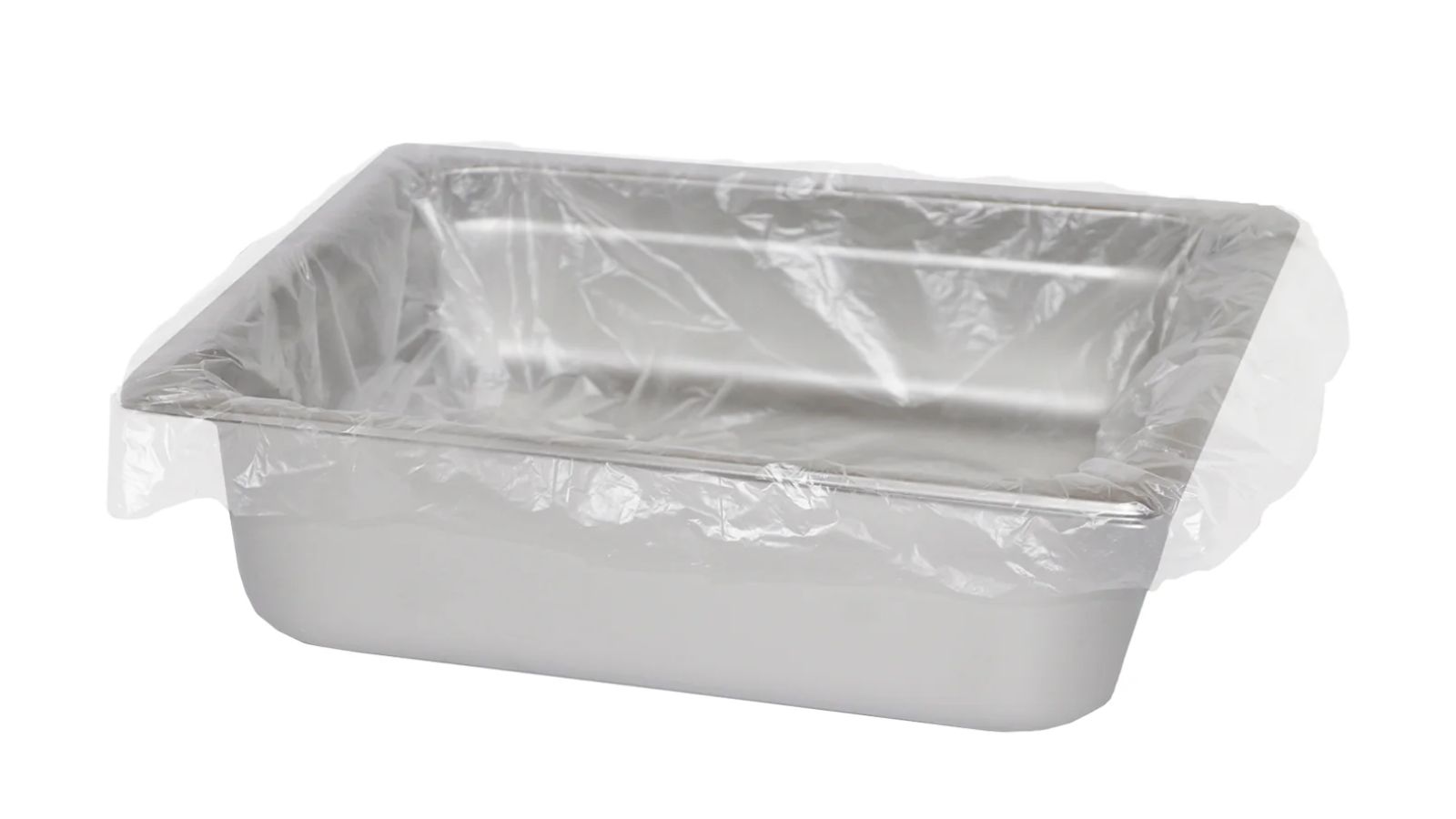
The underlying logic behind pan liners is:
- “Cleaning pans is hard”
- “Food burns or sticks”
- “Liners prevent that”
Any seasoned operator knows — if food is burning to a steam table or prep pan, something else is going wrong!
Root Causes of Burnt Food in Pans (with or without liners):
- Holding product too hot (above 165°F for hours — common when steam tables are cranked all day)
- Not stirring sauces or cheese every 30–45 minutes
- Improper batch sizes (too shallow = dries out, too deep = scorches bottom)
- Poor rotation or failure to swap pans when levels get low
- Not using standard anti-stick methods (nonstick spray, proper pan tempering)
A pan liner doesn’t solve any of that. It just masks the symptoms and possibly allows the operator to avoid fixing the process.
Cleaning Time Claims: Exaggerated or Just Misused?
Let’s break it down in terms of operational truth vs marketing spin:

So yes, there is a bit of time saved, but mostly in cleanup convenience, not actual avoidance of dishwashing. The claim that it takes “6–10 minutes” per pan is hyperbole unless we’re talking scorched cheese left overnight. If you have scorched cheese that takes that long to clean, you have serious operational issues.
The question becomes: “Why did it burn in the first place?” Fix the system — don’t throw plastic at it.
Pan Liners as a Band-Aid: When Do They Actually Make Sense?
Here’s where I see valid use cases:
- Food truck with very limited water or no 3-compartment sink
- Mobile unit relying on water jugs and a sanitizer bucket
- Temporary setups (fairs, events) where cleanup is offsite or delayed
- High-volume lines with limited staff and strict teardown windows
- Specific sticky/greasy items that will never be reused (e.g., wing sauce, queso, sugary glazes)
Even then, I’d argue that training and proper procedures like: rotating pans, monitoring holding temps, using the correct utensils and batch sizes will reduce or eliminate the need for liners.
So for most well-run, well-trained food operations:
→ Pan liners are a convenience, not a necessity.
→ They do not create measurable food quality improvement if the kitchen is doing its job right.
→ They introduce extra plastic waste (and a tiny microplastic risk), and still require pan cleaning.
Better Investments Than Pan Liners:
- Instructing staff on holding best practices, such as STIRRING frequently
- Ensuring steam table temps are monitored and logged
- Using non-stick spray (cheaper than liners)
- Implementing proper rotation and portion control
- Having backup pans to quickly swap during service
Bottom Line:
Pan liners can save time, but only if you’re solving a problem that shouldn’t be there in the first place.
In a well-run truck or restaurant, the benefit becomes minimal and the cost adds up.
Unless you’re dealing with specific constraints (like mobile water supply or extreme labor shortages), the better move is to tighten procedures and train staff, not reach for the plastic liner roll.